
Specifying the wrong material for a commercial landscaping project can lead to costly replacement cycles and compliance failures, particularly when comparing natural hardwood to chemically treated pine alternatives. For landscape architects, playground designers, and project managers, the material selected dictates the safety, longevity, and long-term maintenance costs of the public space. Understanding the structural and regulatory differences between untreated Australian hardwood and treated pine is crucial for making the correct specification decision.
Table of Contents:
- The Case for Treated Pine: Why It’s Commonly Used
- The Hidden Costs of Chemical Treatments (CCA, ACQ)
- What the Australian Standards Say About Playground Timber
- How Natural Hardwood Compares Over 20 Years
- Making the Right Specification Decision for Your Project
The Case for Treated Pine: Why It’s Commonly Used
Treated pine, specifically Radiata Pine, is highly prevalent in the general construction and residential landscaping sectors. The primary appeal of treated pine lies in its low upfront procurement cost and widespread availability. In its raw, untreated form, Radiata Pine is a Class 4 timber. This means it has a natural life expectancy of just 0–7 years above ground and 0–5 years in the ground. To make it viable for outdoor use, the timber must undergo intensive chemical processing to artificially inflate its resistance to decay and termites. While this lowers the initial invoice price, treating a Class 4 softwood does not give it the density or structural integrity of an inherently durable hardwood.
The Hidden Costs of Chemical Treatments (CCA, ACQ)
The chemical processes used to treat pine introduce significant long-term drawbacks for commercial applications. The most common treatment historically has been Chromated Copper Arsenate (CCA). While ACQ (Alkaline Copper Quaternary) and Copper Azole treatments are also permitted and sometimes viewed as alternatives, they remain chemical processes designed to saturate the porous softwood.
The hidden cost of these treatments is their environmental and safety impact. The chemical leaching over time, particularly in damp or high-wear environments, raises valid concerns for public spaces, schools, and childcare centres. Furthermore, treated pine requires ongoing maintenance, sealing, and a strict end-of-life disposal protocol, as chemically treated timber cannot be safely burned or easily repurposed, adding significant long-term waste management costs to municipal budgets.
What the Australian Standards Say About Playground Timber
When constructing children’s play areas, safety compliance leaves no room for ambiguity. The Australian Standard AS 4685:2014 strictly regulates the materials permitted in these environments.
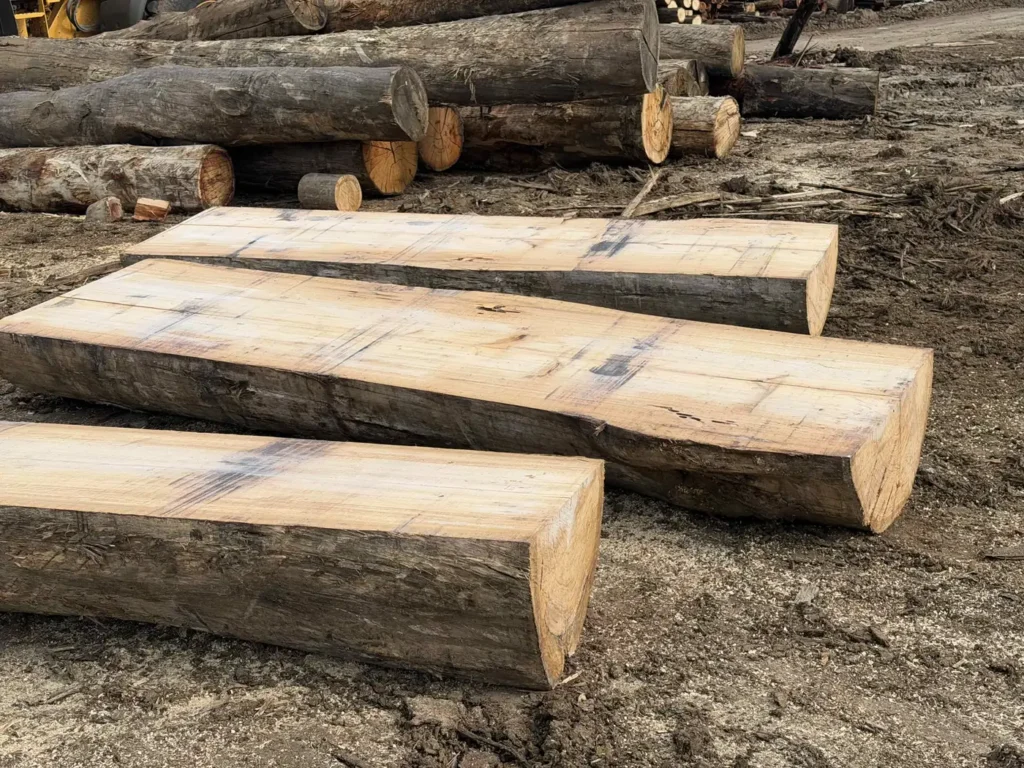
Under AS 4685:2014, timber used in playground construction must not be treated with CCA or creosote. Because of these prohibitions on toxic chemical treatments, naturally durable hardwood (Class 1 or 2) is specifically recognised as the preferred, compliant alternative. Furthermore, child safety organisations, including Kidsafe NSW and Kidsafe Victoria, advocate for the use of natural, untreated materials to eliminate chemical exposure risks.
To meet these compliance standards seamlessly, integrating natural, debarked hardwood logs directly into your project planning is the most secure route. View the RAMA Firewood Landscaping Logs page for commercial-grade natural timber solutions.
How Natural Hardwood Compares Over 20 Years
When evaluating project budgets, it is essential to calculate the total cost of ownership over a 20-year lifecycle rather than just the initial procurement cost.
| Durability Class | Timber Type | Above-Ground Life | In-Ground Life | Key Species |
|---|---|---|---|---|
| Class 1 | Natural Hardwood | 40+ years | 25+ years | Ironbark, Spotted Gum, Blackbutt |
| Class 4 | Pine (Untreated) | 0–7 years | 0–5 years | Radiata Pine |
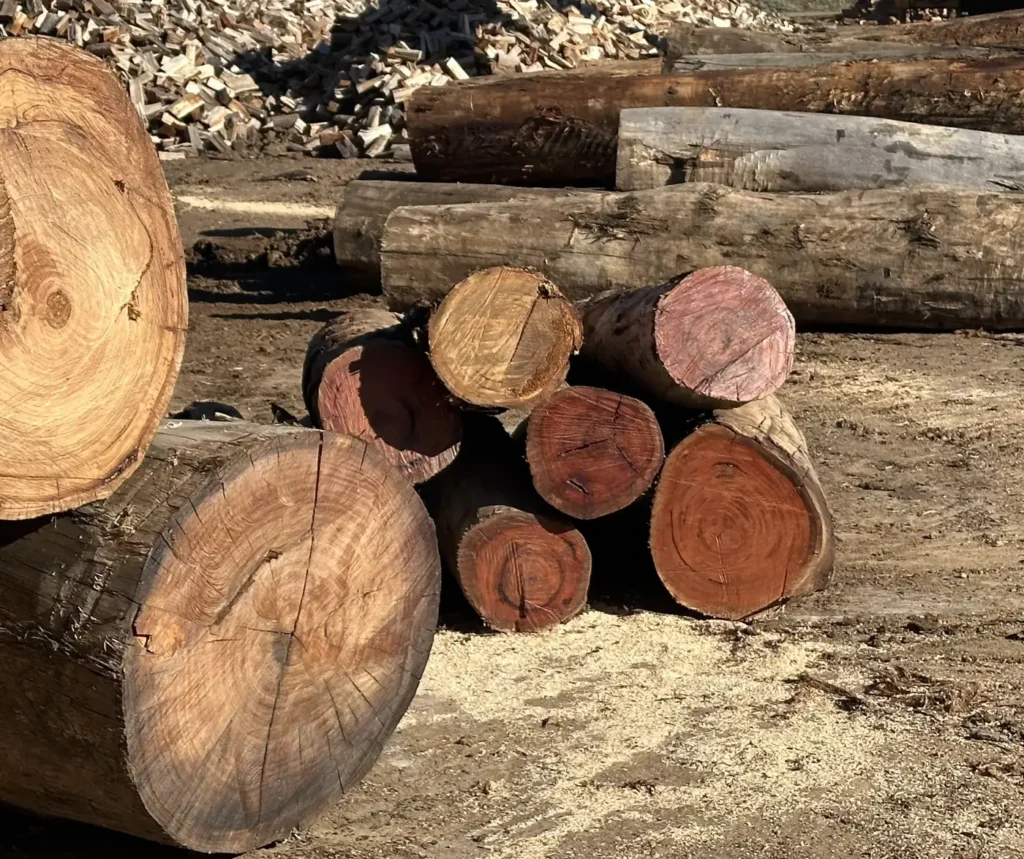
Class 1 Australian hardwoods naturally achieve 25+ years of life in-ground and 40+ years above-ground without the need for chemical intervention. Over a 20-year span, treated pine installations in high-traffic public areas are likely to suffer from mechanical wear, splintering, and eventual decay, necessitating partial or total replacement. Conversely, high-density hardwood weathers naturally and gracefully, absorbing heavy impact while retaining its structural integrity. The requirement to replace a treated pine installation just once within a two-decade window immediately negates any upfront savings, making natural hardwood the financially superior commercial choice.
Making the Right Specification Decision for Your Project
The decision between natural hardwood and treated pine comes down to project legacy. If you are tendering for local councils, designing a school playground, or constructing a high-traffic urban plaza, the mandate is clear. By specifying fully seasoned, debarked Australian hardwood, you guarantee compliance with AS 4685:2014, remove the hazards of chemical leaching, and secure a 25-plus-year structural lifespan for your in-ground applications. It is a specification that protects the public, satisfies strict municipal standards, and ultimately delivers a higher-quality commercial landscape.
FAQ
Is CCA-treated pine safe for playgrounds in Australia?
No. The Australian Standard AS 4685:2014 expressly prohibits the use of CCA-treated timber in playground construction.
How long does natural hardwood last compared to treated pine?
Class 1 natural hardwoods (like Ironbark and Spotted Gum) will last 25+ years in-ground and 40+ years above-ground naturally. Untreated Class 4 pine lasts only 0–5 years in-ground, and relies entirely on chemical saturation to extend its lifespan, though it lacks the physical density of hardwood to resist heavy mechanical wear.
What is ACQ treatment and is it safer than CCA?
ACQ (Alkaline Copper Quaternary) is a chemical treatment permitted under the standards, functioning as an alternative to CCA. However, it remains a chemical process, making naturally durable, untreated hardwood the preferred chemical-free alternative.
Why is untreated hardwood recommended for children’s play areas?
Untreated, naturally durable Class 1 or 2 hardwood avoids the introduction of toxic chemicals like CCA and creosote into sensitive environments. This ensures strict compliance with playground safety standards and child safety guidelines.